Archive for April, 2012

How design changes over time

1

Buildings are not complete and perfect when they are constructed. They change over time, support multiple uses, and host unforeseen tenants. Architecture as commonly practiced tends to overlook the dynamic nature of our structures and instead imagines a pure, never-changing aesthetic.  How Buildings Learn: What Happens After They’re Built is an exploration of how various types of buildings evolve and grow with and around their successive inhabitants. Buildings must be in harmony with our human need to adapt our environments to our changing needs. The book advocates “working with time, instead of against it.”

Author Stewart Brand illustrates that open structures which invite customization are the most amenable to future uses and human need. Reusable spaces are most valuable because they reflect the temporary nature of our personal lives and commercial activities. Architecture is generally not in touch with this need for improvisation and tends towards a moment-in-time perfection.

 We are convinced by things that show internal complexity, that show the traces of an interesting evolution… An important aspect of a design is the degree to which the object involves you in its own completion. Some work invites you into itself by not offering a finished, glossy one-reading-only surface. I think that humans have a taste for things that not only show that they have been through a process of evolution, but which also show they are still a part of evolution. They are not dead yet.
–Brian Eno, quoted in How Buildings Learn
Layers of Change
Buildings contain several strata, each of which ages and transforms at a different rate. The geographical location (site) of a building rarely changes, while the “stuff” inside is in constant flux. Between the two are five other layers which change according with new owners, technological opportunity, commercial fortunes, and currents of fashion. Buildings are not “inert vessels”, they are the sites for daily living, creativity, commerce, and social interaction.
  • Site – the geographical setting of the building, it’s location and legally defined lot
  • Structure – the foundation and load bearing elements
  • Skin – the exterior of the building
  • Services – communications, electrical, plumbing, HVAC, elevators
  • Space Plan – the interior layout that defines placement of walls, ceilings and doors
  • Stuff – chairs, bookcases, beds, sofas, kitchen appliances


Architecture as Art

The problems of “art” as architectural aspiration come down to these:

  • Art is proudly non-functional and impractical.
  • Art reveres the new and despises the conventional.
  • Architectural art sells at a distance.

Brand finds architecture’s artistic inclination to be at the heart of its frequent inability to provide for the needs of its inhabitants. In the book and video below he catalogs the functional failures (e.g., leaky roofs, overheating buildings, falling siding) of trend-setting architects like I.M. Pei and Frank Lloyd Wright. In the book and video (below), he discovers that open spaces which invite and support many uses age more gracefully and are hospitable for multiple generations of occupants. Buildings which are not created with people in mind end up as uncomfortable environments and do not enrich social relationships.

Brand quotes Herman Hertzberger as saying that architecture should not be so brittle as to lose its identity when its usage changes; rather, “architecture should offer an incentive to its users to influence it whenever possible, not merely to reinforce its identity, but more especially to enhance and affirm the identity of its users.” Because architectural magazines and awards tend to depict empty buildings and de-emphasize inhabitants, architecture is generally not in touch with our need for improvisation. This perspective doesn’t support iteration and feedback loops which are essential for better design and improvement. To counter this trend, he proposes a “25-year” award that would recognize longevity of architecture value as judged by return visits to a building well after it is completed. Having architects return to a building after completion would support a time-based view of design. An “architecture of improvisation” provides a more realistic approach because it recognizes that buildings are not “perfect and finite upon completion.” Like any designer, an architect cannot foresee the future–designs cannot be perfect nor frozen in time since people’s lives are dynamic and needs will forever change. Brand calls the rigidity of design completion and the hand-off of the building to its owner “barriers to learning” because the building is considered finished, when in reality it has just been born.


Flow

The transition from image architecture to process architecture is a leap from the certainties of controllable things in space to the self-organizing complexities of an endlessly raveling and unraveling skein of relationships over time. Buildings have lives of their own.

In this BBC Series How Buildings Learn segment, “Flow”, Steward Brand presents several architectural design flaws. He describes leaky roofs, de-laminating siding, sterile lobbies, and overheating due to poor solar exposure. In many cases, little to no thought is given to the maintainability (e.g., washing windows) of the building. The MIT Media Lab, featured in this video, is also discussed in the book as mostly inhospitable.

Several architects in the video discuss the root causes of the frequent inability of architecture to create usable and long-lasting buildings. When a building is meant to be a “statement” or “piece of art”, it loses its connection to its human tenants and is unable to work functionally. The more the image of the building separates from the reality of its daily use, the less the building can support the organic change that inevitably occurs.

Brand says architects should “stop defying time and put time to work” because “evolutionary design is healthier than visionary design.” Keeping time, flexibility, and evolution in mind allows the construction of buildings that “our descendants will thank us for.”


Download YouTube Video | YouTube to MP3
The Low Road
Old ideas can sometimes use new buildings. New ideas must come from old buildings.
–Jane Jacobs, The Death and Life of Great American Cities

For Brand, “The Low Road” represents buildings which are “never celebrated or photographed”–mobile homes, factories, and old shacks. Although they are not celebrated, “it is in buildings like these that you find the real creativity in civilization” because “this is where you can try things.” By contrast, a pre-built environment which assumes perfection upon completion leaves no space for customization and has few areas that support human relationships which “flourish in a mess.” “High Road” buildings such as mansions, castles, churches, and institutional buildings are also adapted over time. In the book, Brand compares the changes to George Washington’s Mount Vernon, James Madison’s Montpelier, and Thomas Jefferson’s Monticello, each of which grew and expanded over the course of decades. Although different in nature, both “high road” and “low road” buildings are governed by the same dynamics.


Download YouTube Video | YouTube to MP3


Download YouTube Video | YouTube to MP3

(Re)Designing business models

1

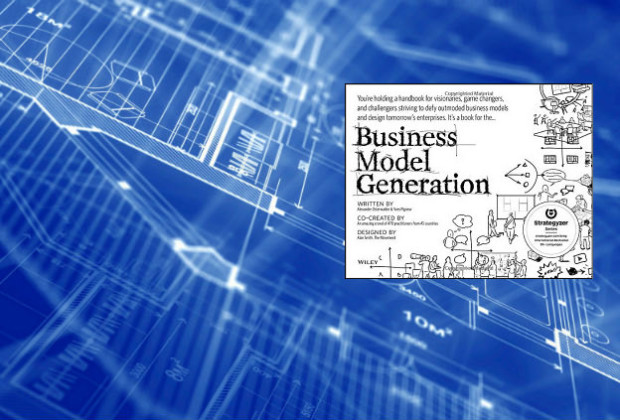
Alex Osterwalder’s Business Model Generation (hashtag #bmgen on Twitter) is a unique book which is at the forefront of the current interest and emphasis on understanding business models and their design. Osterwalder and his co-creators define a business model in a malleable way that empowers the reader to extend, expand, and modify existing business models along a number of dimensions. Key to their method is a collaborative ideation work session that challenges participants to examine and overturn assumptions– he says that “business model innovation is about challenging orthodoxies” and “developing an appetite for new models”. Osterwalder’s Business Model Canvas, Steve Blank’s Customer Development and  Eric Ries’ Lean Startup have been noted as three powerful tools for entrepreneurs and people transforming existing businesses.

This book is a complete package for reinventing your business model and spans theory, examples, templates, ideation methods, and a detailed process for strategic planning. Business Model Generation begins with the definition of the canvas and its elements. Using the canvas, Osterwalder describes five common business model patterns to illustrate each building block: unbundling, the long tail, multi-sided platforms, freemium, and open business models. To to help the business model design team, Osterwalder provides six key design methods for business model innovation: customer insights, ideation, visual thinking, prototyping, storytelling, and scenarios. With those tools in place, the book moves on to a broader strategic framework for business model reinvention–mapping the marketplace and larger economic environment, evaluating business models using SWOT analysis, and managing multiple business models. Osterwalder provides specific transformations and patterns for modifying existing business models. The environmental and evaluation sections of the book contain detailed lists of questions to ask as the team examines their business model. Finally, a step-by-step process is included that situates business model design within a larger business planning framework.

Business model innovation is typically motivated by the need to address current but unsatisfied market needs, to introduce a new product or service, to transform or disrupt an existing market, or to create a completely new market. These key strategic business imperatives can be well supported by the method in this book.


The Business Model Canvas

The Business Model Canvas is the central concept of the book and contains the elements of a business model: value proposition, cost structure, revenue streams, partners, activities, resources, customer relationships, channels and customer segments.

The Business Model Canvas is a bit like an artist’s canvas. When an artist starts painting, he often has a vague idea–not an exact image–in mind.
Crafting a business model is no different. Ideas placed on the Canvas will trigger new ones. The Canvas becomes a tool for facilitating the idea dialog…

Each element can be examined on its own or as it relates to others. By drawing each element by hand, the team working through the business model can find new opportunities and evaluate alternatives as a group. The Business Model Generation method is highly collaborative, visual, and iterative. The core of the process is the conversation and multiple viewpoints that are brought to bear around each element of the canvas and the relationships between elements. Prototyping is a key benefit of using the canvas, because key elements of a new business model can be discussed by the team and modified as each aspect is explored. The process embodies design thinking and involves all team members in innovation and future vision.

The right side of business model canvas emphasizes value, while the left side is predominantly cost driven. Financial considerations (costs, revenues) are on the bottom and value is at the center with connections to partners and customers.


View more presentations from Alexander Osterwalder
The Business Model Environment
Osterwalder notes that “developing a good understanding of your organization’s environment helps you conceive stronger, more competitive business models.” To accomplish this environmental scan requires evaluating four external factors:
  • Key Trends (regulatory, technology, social, economic)
  • Industry Forces (supply chain, competitors, new entrants, substitutes)
  • Market Forces (market segments, demand, issues, switching costs)
  • Macro-Economic Forces (global markets, capital markets, infrastructure)

Examining each factor with a series of questions leads to new opportunities for each section in the business model. Alternatives for new customer segments, new resource needs, and revenue models may emerge. Likewise, different relationships with competitors and supply chain partners may come to light during the environmental scan.


Modifying your business model

Osterwalder applies the Four Actions Framework from Blue Ocean Strategy as provocative questions for business model reinvention:

  • Which factors can you eliminate that your industry has long competed on?
  • Which factors should be raised well above the industry’s standards?
  • Which factors should be reduced well below the industry’s standards?
  • Which factors should be created that the industry has never offered?

This set of questions can be applied against the cost, value, or customer sections of the business model canvas. Cost reduction, new investments, or replacement of one set of costs with another guide  exploration of the cost side of the canvas. Focusing on the value segment has impacts to both costs and value segments as it surfaces new, reduced, or modified value elements. Applying the questions to the customer segments of the canvas yields new, reduced, or modified customer relationships and groups that then have effects on the value proposition and costs.

Another approach Osterwalder presents for business model innovation is the various epicenters which can drive change. The business model design team can begin questioning assumptions and generating ideas from each of these areas of the canvas.

  • Resource-driven: starts with an organization’s current infrastructure or partnerships
  • Offer-driven: new value propositions are created which drive change to the other canvas elements
  • Customer-driven: customer insights or benefits affect other business model components
  • Finance-driven: pricing or revenue model innovations affect other areas of the canvas
  • Multiple-epicenter driven: change emerges from various business model building blocks


The Process

One of the revolutionary aspects of this book is the idea that business models should be evaluated, managed, and evolved along with other components of the business. This is a very progressive concept and enables fundamental business transformation and new value creation to take place. He applies a familiar five phase model to business model design process: mobilize (goals, objectives), understand (research, identify patterns), design, implement, and manage. He maps all the tools and case studies to each phase to provide a full toolkit for implementation. Osterwalder is, at the same time, quite objective about the level of process that can be applied to this domain given the complexity and scope of the undertaking.

The challenge, though, is that business model innovation remains messy and unpredictable, despite attempts to implement a process. It requires the ability to deal with ambiguity and uncertainty until a good solution emerges.
The world is so full of ambiguity and uncertainty that the design attitude of exploring and prototyping multiple possibilities is most likely to lead to a powerful new business model.

In this video, Osterwalder presents the business model design approach to an audience at Google:


Download Video | Convert to MP3

Information Appliances – A solution to product complexity

0

This book weaves together three themes: product complexity, weaknesses of personal computers, and the concept of an information appliance. Norman’s focus is the personal computer as it was available in 1998 when the book was written. However, many of his observations and predictions have proven to be on the mark from the 2012 vantage point. He uses many early 20th century technologies as examples of disruptive patterns, standards adoption and poor usability design. Human-centered design figures prominently in the book as an antidote to the Swiss-Army knife approach that has led to the the personal computer as describes in the book.

Norman devotes several chapters to dissecting the weak points of personal computers: complexity, general use features, and a business model based on planned obsolescence. He also points out that the traditional graphical user interface, which was initially developed to surface all available functions and options, cannot scale to accommodate the massively complex software systems which are now being produced.

In The Invisible Computer: Why Good Products Can Fail, the Personal Computer Is So Complex, and Information Appliances Are the Solution, Donald O. Norman describes his ideal information technology product: single purpose, highly interconnected, simple, easy to use, and a pleasure to own. His vision contains parts of ubiquitous computing and current mobile technology.


Technology Adoption Lifecycle

As long as the technology’s performance, reliability, and cost fall below customer needs, the market is dominated by early adopters…but the vast majority of customers are late adopters. They hold off until the technology has proven itself, and then they insist upon convenience, good user experience, and value.

Norman uses the Technology Adoption Life cycle to illustrate the mistakes companies make as they introduce technology products to the market. Frequently, products are sold and marketed using the wrong emphasis which is out of synch with the life cycle phase for the technology. Norman blends Clayton Christensen’s performance curve with Geoffrey Moore’s Technology Adoption Life cycle to indicate how products should be brought to market. In the early stages of the technology life cycle, early adopters are looking for a solution to a specific problem and anything that helps them will be sufficient. As the technology begins to get traction in the market, explaining the benefits and creating effective messages becomes more important so marketing becomes a primary activity. Eventually, as the product matures and hits the mainstream market, usability is at a premium, and then user experience design skills join technology and marketing to form the three legs of the stool. He argues that information appliances are more at home in the consumer marketplace than they are in the high-technology marketplace.

The principle here is “Know your customer. Being first, being best, and even being right do not matter; what matters is what the customers think.” For infrastructure technologies, something Norman addresses several times in the book, n it’s just important be be good enough.


Analog versus Digital

The dilemma facing us is the horrible mismatch between the requirements of these human-built machines and human capabilities. Machines are mechanical, we are biological. Machines are rigid and require great precision and accuracy of control. We are compliant. We tolerate and huge amounts of ambiguity and uncertainty, very little precision and accuracy.

The mismatch between the way information is processed by computers and the way it is processed by humans is for Norman the source of much of the poor user experience design. He seeks a complementary interaction between the two fundamentally different systems. Today, he writes, “the designers determine the needs of the technology and then ask people to conform to those needs.” This mismatch is the source of much frustration with technology products.


Easy and Difficult

Much of the book is devoted to ease of use and exploring how to make technology fit well in our lives.

A feeling of control, a good conceptual model, and knowledge of what is happening are all critical to ease of use. The controls must be recognizable, it must be easy to remember their function and operation, and they must provide immediate and continual feedback about the state of the system.
When is something difficult? When the controls and actions seem arbitrary, when the system can get itself into peculiar states, peculiar in the sense that the person using it does not know what it it doing, how it got there, and how to recover.

Understanding a technology is paramount for its usability. Norman writes that “understanding comes about when the system presents a clear conceptual model of itself, making the possible actions apparent.” Using our natural pattern-seeking behavior in new situations, “we look for familiar patterns, we look for any signs that might direct us, and we try to make sense of whatever happens.”


Disrupting the Personal Computer

Norman sees information appliances as the antithesis to personal computers and as a true disruptive technology. Computer manufacturers and companies within the PC ecosystem find it hard to turn away from their core products and business models in favor of a new approach. However, the personal computer industry, at the time of this book’s writing, was in its mature phase and the focus on technological firepower and feature-rich products needed to give way to simplicity and user centered design.


Information Appliances

Information appliances should be thought of as systems, not isolated devices. The goal is to provide solutions for the consumer, not just electronic gadgets. The physical devices is only piece of the entire story. The successful business will provide all the pieces. Those pieces include consumables, content, and services.

Norman effectively bases his information appliances on “jobs to be done“, Clayton Christensen’s fundamental principle of product and service development. We don’t want to do word processing, or work with databases or spreadsheets, we want to write letters, print pictures, or find answers to financial questions. Norman’s ultimate design aesthetic is for infrastructure (technology) to remain invisible, or at least in the background. The task, or job, that the person wants to do should be in the foreground of the product. A Swiss Army knife symbolizes the product that tries to do too much and, in the process, ends up doing nothing well. Norman acknowledges the tradeoffs between the convenience of a multi-purpose product and the power of a single-purpose product.

Information Appliances are special-purpose products which are used for single “jobs to be done”; for example, a camera, digital music player, or MIDI instrument. Examples from healthcare include home medical devices such as specific blood test units, heart monitors, and breath analyzers. Other possibilities include automobile guidance systems and home finance centers for paying bills, reviewing finances, and paying taxes.

An important attribute of Information Appliances is the ability to communicate with other Information Appliances. Applications on personal computers are valuable because they can create more value by exchanging information between one another and transforming inputs. Information Appliances such as digital musical instruments can use standards like MIDI to create a more valuable network than singular, self-enclosed systems.

Norman illustrates the invisibility of technology principle with the history of automobile and electric motors. In early cars, the engine interface was highly exposed and required several adjustments (spark, choke, crank) in order to start. Now, automobile engines can be started literally by pressing a button. Likewise, electric motors are present in many common devices, but their presence is not explicit–they are effectively hidden. Norman contrasts these technologies with personal computers which expose an enormous amount of their complexity to the user and demand a high level of expertise to operate.

Norman outlines three design principles for Information Appliances:

1. Simplicity: The complexity of the appliance is that of the task, not the tool. The technology is invisible.

2. Versatility: Appliances are designed to allow and encourage novel, creative interactions.

3. Pleasurability: Products should be pleasurable, fun, enjoyable. A joy to use, a joy to own.

The power of specialized information appliances comes from their ability to be interconnected. Information can be exchanged between them and they can be combined to perform more powerful tasks.


So long as the personal computer industry is in a mature phase of its life cycle, but continues to produce products as if it was in its early stages, it is ripe for disruption by single-purpose information appliances. Usability problems with personal computers arise not only from this mismatch in needs relative to life cycle position, but also from organizational and structural issues in the companies which produce them. Norman wants to bring human centered design to these products and push the technology to the background. He devotes an entire chapter to several organizational approaches for injecting better product design into a company’s DNA.


Further Reading: Appliances of the Future (Donald O Norman’s jnd.org blog)

Go to Top