Posts tagged Lean Startup
Validated Learning
2
Validated learning is a cornerstone of the Customer Development and Lean Startup methods. Both approaches define a startup as an institution whose purpose it is to create viable business by learning within a chaotic environment. A startup iterates its way to success by tracking meaningful metrics and creating testable hypotheses about growth and value. The outcomes of each experiment guide decisions and streamline processes such as backlog management and product feature prioritization.
Ash Maurya’s e-book Running Lean covers three phases of a startup’s lifecycle: problem/solution fit, product/market fit, and achieving scale. The first phase answers the question “do I have a problem worth solving?” and corresponds to Steve Blank’s Customer Discovery phase. The outcome of problem/solution fit is a Minimum Viable Product (MVP) which is then used to determine whether the solution meets customer needs during the product/market fit phase. Ideally, a startup achieves sufficient market adoption and can move on to the scale phase. Prior to product/market fit the startup is focused on learning and validating its assumptions about value and growth. Afterwards, optimization becomes a key concern.
Every aspiring entrepreneur has a Plan A. Unfortunately most Plan As don’t work…What separates successful startups from those that are not isn’t that they have a better Plan A, but that they can get to Plan B before they run out of resources.
In the video below, Maurya describes the Lean Startup process and points out that effective learning is what differentiates successful startups from unsuccessful ones. The description he gives of moving from Plan A to Plan B is similar to the process Randy Komisar and John Mullins wrote about in their book Getting to Plan B. While Komisar and Mullins focus on using analogs, antilogs, and leaps of faith, Maurya relies on the Lean Startup’s learning focus. He describes the rigorous approach that Lean Startups take as they iterate “from Plan A to the plan that works”. Rather than using gut feel and intuition, Lean Startups use validated learning to discover successful products and business models. Lean Startups immediately start building and testing their business model instead of spending months writing a business plan.
Lean Startup is not about asking what customers want, it is about testing the original vision against what customers do.
Download with Vixy | YouTube MP3 Converter
The validated learning process in a Lean Startup begins with documenting your business model. Each part of the business model (what is the problem we’re solving?, who is the customer?, how will we reach our customers?, how will we capture revenue?) is systematically tested through controlled experiments. Validating Product/Solution fit (do I have a problem work solving?) is validated by decoupling the problem from the solution and just testing the problem with customers through interviews. The startup’s business model is documented using the Lean Canvas, which is a business model documentation tool adapted from Alex Osterwalder’s book Business Model Generation.
Validated learning and pivots are key activities in the first two startup lifecycle phases (Problem/Solution Fit, Product/Market Fit). Scale, the third phase, is focused on growth and relies on optimization for success. Pivots are strategic experiments designed to find a plan that works.
In order to maximize learning, you have to pick bold outcomes versus change incremental improvements. So, rather than changing the color of your call to action button, change your entire landing page.
A basic Lean Startup technique is doing the smallest thing possible to learn from customers.
Lean Startups use a iterative Build-Measure-Learn loops to test each successive hypothesis from solution, to demo, to minimum viable product. Maurya recommends making bold changes, but warns against relying solely on speed and learning. He says focus (Right Action, Right Time) is needed to ensure there isn’t waste as the startup simply races to find its next iteration and optimizes too early.The feedback loop is applied to each component of the startup’s overall solution:
- understanding the customer problem (formulate testable hypothesis, articulate the problem, conduct problem interview),
- validating the product demo (formulate testable hypothesis, build the demo, conduct the solution interview with customers)
- validating the solution (formulate testable hypothesis, build the minimum viable product, conduct the minimum viable product interview with customers)
In a Lean Startup…a feature is only “Done” when it provides validated learning from customers.
One of the most interesting concepts in the book is adding a fourth step to your feature lifecycle. A typical Kanban board includes three phases: backlog, in-progress, and done. Adding a fourth phase called “Validated Learning” requires that you prove each feature has provided validated learning (“was this feature any good?”). Closing the feedback loop by determining whether the feature proved or disproved the initial hypothesis ensures that the startup learns with each release. This underscores the Lean Startup philosophy of deliberately formulating testable hypotheses in everything you do to maximize learning.
Maurya’s e-book contains a step-by-step illustration of the Lean Startup method in action. He uses the book itself as a case study and includes detailed flowcharts and scripts, templates, and techniques for customer interviews. He walks through his specific hypotheses for the book and business model canvas product to illustrate how he formulated his business model experiments. The book is focused on web-based products and contains a lot of advice tailored to that type of business (landing pages, SEO, blogs) but the principles can be applied to variety of products and services.
Maurya’s e-book is a great complement to The Lean Startup by Eric Ries. While Ries covers the entirety of Lean Startup strategy, including its roots in Lean manufacturing, and tells the story of his company, IMVU, Maurya provides a “get started today” tactical handbook that will get you up and running within pages.
Related Posts:
Engines of Growth
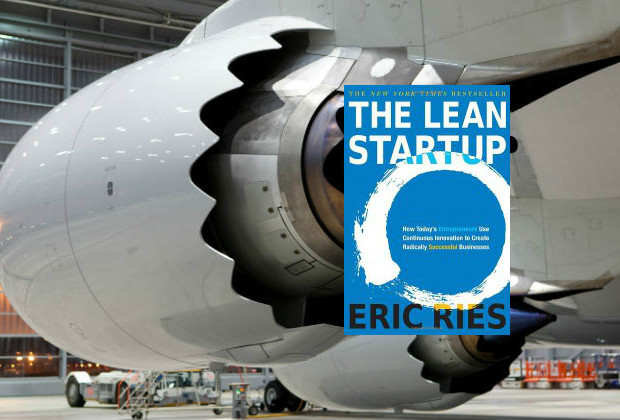
0The Lean Startup method is based on validated learning through identification of assumptions (“leaps of faith”) and testing hypothesis through creation of minimum viable products. Author Eric Ries believes that because of these attributes, entrepreneurship can be learned and taught. He says that entrepreneurs are everywhere and gives many examples in The Lean Startup: How Today’s Entrepreneurs Use Continuous Innovation to Create Radically Successful Businesses of non-traditional entrepreneurs (e.g., people who don’t work at high tech startups in Silicon Valley).
The results of the strategic experiments lead to moments of decision called “pivots”: He defines a pivot as “a new strategic hypothesis that will require a new minimum viable product to test.” Existing in an environment of extreme uncertainty, a startup moves forward by conducting these experiments with “small batches” of work to minimize risk, maximize learning, and accelerate understanding of the market.
The concept of “engines of growth” stands at the intersection of the concepts of a minimum viable product, selection of the right metrics, and validated learning. The engine of growth is the fundamental economic driver that is available to the startup based on its business model and customer characteristics. It is “the mechanism that startups use to achieve sustainable growth.”
In this book, Ries provides advice on identifying and managing a startup’s growth strategy. Because startups exist to identify sustainable business models, identifying, measuring, and managing the correct engine of growth is critical.
New customers come from the actions of past customers
Word of mouth, influence from product usage, advertising, and repeat purchase or use are four ways that past customers drive sustainable growth. Depending on the characteristics of the product or service, word of mouth marketing, funded marketing activities, or “sticky” attributes may be the best way to ensure long term growth.
To achieve this goal, Ries identifies three engines of growth for startups along with associated metrics:
- Sticky – Some products and services are designed to be consumed on a repeated basis (versus one-time like a wedding or other life event). An auction sites or on-line game are examples of services which use a sticky engine of growth. For repeat purchase products, churn and retention are key metrics. Measuring only new customer acquisition doesn’t tell you whether your sign up rate is sufficient to offset attrition.
- Viral: This engine of growth runs off recommendations from existing customers to new customers. Awareness and influence are generated by usage of products; for example, you see a friend driving an SUV and decide that is the ride for you. Viral effects, such as the original hotmail team’s usage of a “get your free e-mail at hotmail” link at the bottom of each e-mail, increase adoption rates. Viral products aim to minimize the friction related to usage. In some cases, viral services do not charge customers, opting for advertising revenue, because their engine of growth is based on adding new users and network effects. The relevant metric here is the viral coefficient (number of new customers signing up as a result of one new customer). Viral services with a coefficient that is greater than 1 (for every one person who signs up, there is more than one new person getting added to the business as a result) have an exponential growth curve.
- Paid: In this case, paid advertising, marketing programs, or outbound sales sustain the growth engine. Ries stresses that advertising must be funded by profitable operations, not a one-time expense. Increases in growth come from either increasing revenue per customer or lowering customer acquisition costs. In both cases,
Companies that attempt to build a dashboard that includes all three engines tend to cause a lot of confusion because the operations expertise required to model all these effects simultaneously is quite complicated.
Ries points out that a company should not use generic “vanity” metrics. Instead it should metrics that are specific to its growth engine. For example, a repeat use business should not focus on tracking total customers because attrition is such a critical metric for them. Changing customer segments is a good indicator that metrics and engines of growth must be adjusted.
Matching business metrics to the engine of growth allows you to determine whether to invest more in product development, or whether you have reached the limit of value new features can provide. If the metric growth rate is decreasing or stalled, you know that the effort you’re putting into the product isn’t making a difference. Likewise, the metric that measure each type of growth will indicate whether product/market fit has been achieved. The growth and direction of key metrics are the true indicator of startup progress.
Startups occasionally ask me to help them evaluate whether they have achieved product/market fit. It’s easy to answer: if you are asking, you’re not there yet.
Related Posts
Pivot or Persevere
0The Lean Startup method advocates a scientific approach to entrepreneurial management by identifying hypotheses related to one’s product, business model, or engine of growth. Making decisions based on metrics from these experiments is what propels the Lean Startup forward. As the startup learns, key strategic decisions are made based o on the evidence gathered from validating assumptions about value and growth. The term “pivot” has gained a ton of popularity lately and refers to these key forks in the road. In The Lean Startup: How Today’s Entrepreneurs Use Continuous Innovation to Create Radically Successful Businesses
Eric Ries devotes a chapter to explaining the varieties of pivots available to startups and the process for making a successful change.
Ries goes into a lot of depth and describes a pivot as a “strategic hypothesis”, not just a change for change’s sake or a change in the face of failure. He defines a startup as an organization whose purpose it is to learn to how to build a successful business and therefore a strategic change based on validated learning is a cornerstone of the Lean Startup method.
A pivot is a special kind of change designed to test a new fundamental hypothesis about the product, business model, and engine of growth.
- Zoom-in Pivot: In this case, what was once a feature within a larger product or system now becomes the entire product.
- Zoom-out Pivot: This is the opposite of the zoom-in pivot, where the entire legacy product now becomes a single feature of a new, larger product.
- Customer Segment Pivot: This pivot involves changing the customer segment based on validated learning about an existing customer segment.
- Customer Need Pivot: Here, the startup team develops a high level of customer intimacy and discovers a that the initial problem wasn’t a problem after all but there is an adjacent one that proves fruitful.
- Platform Pivot: In the platform pivot, the business begins by creating a product on top of a platform (or just a product) and then realizes that a platform strategy offers a better chance of success.
- Business Architecture Pivot: This is a switch between the volume operation business architecture to the complex system business architecture, or vice versa. These two business architectures are described by Geoffrey Moore in his book Dealing with Darwin.
- Value Capture Pivot: Ries points out that value capture is typically equated to monetization or revenue models, but value capture is in reality a deep-rooted attribute of the way a product is designed and how a business runs.
- Engine of Growth Pivot: Ries identifies three types of engines of growth in the book: the viral, sticky, and paid growth models.
- Channel Pivot: Changing distribution channels can dramatically alter the way value is delivered and experienced by the customer. A common example is switching from a third party distributor to a direct sales channel.
- Technology Pivot: Here, the product, operating model, distribution channel, and business model remain the same while the underlying technology changes.
The decision to pivot is so difficult that many companies fail to make it.
Ries lists the many reasons that pivots are difficult, not the least of which is the disruptive innovation blindspot that Clayton Christensen elaborates in his book The Innovator’s Dilemma. He also identifies three causes for delays in the pivot decision: 1) the use of vanity metrics rather than hypotheses which support learning; 2) when the founder(s) have an unclear hypothesis and are unable to generate the learning required to know when to change; and 3) fear that the startup will fail without a chance to prove itself.
Further Reading: Eric’s blog is Startup Lessons Learned.
In this video from a June 2010 Lean Startup Circle Boston presentation, Matthew Mamet and Matt Wiseley, founders of EditMe.com describe how they executed a market focus pivot in their startup business.
Pivoting in a Lean Startup – A Case Study by EditMe.com from EditMe on Vimeo.
Your idea is probably wrong.
This entertaining presentation features Aaron Batalion of LivingSocal who gives several examples of famous pivots: Flickr–from social multi-player games to photo sharing; Paypal–from “beaming money between Palm organizers” to an internet financial behemoth; and Nintendo–from physical playing cards to market leading electronic game consoles. He also describes the various evolutionary stages his business took through the years as they searched for a scalable business model.
Download with Vixy | YouTube MP3 Converter